Senegalese agriculture remains vulnerable to climatic hazards and is constrained by insufficient rainfall. Hence the urgent need for accelerated development of irrigation.
Of a potential irrigable area of nearly 350,000 ha, excluding lowlands and mangroves, only 130,000[1] ha are estimated to be irrigated to date. At the current rate, it would take several decades to maximise the irrigable potential. Hence the urgency to step up the pace. Building on our presence in Senegal and our experience in Morocco, where we have equipped nearly 170,000 ha with irrigation systems, CMGP offers some ideas for achieving such acceleration.
Structuring the irrigation sector
Irrigation requires genuine expertise to properly design and scale the network and ensure the supply of suitable equipment commensurate with the investment’s lifespan. In Senegal, given the limited resources and the real need for technical assistance among farmers, it would be beneficial for all stakeholders in the sector to establish an association. Modelled on AMIAG[2] in Morocco, this would enable the coordination of training efforts, the organisation of certification for various areas of expertise and materials, and the acceleration of the sector’s formalisation, whilst serving as the government’s primary point of contact for organising the sector.
For its part, CMGP intends to play an active role in setting up such an association, as we have done in Morocco.
Appropriate financing mechanisms
An irrigation network is a durable physical asset that pays for itself over several years through water savings, higher yields and even an extension of the growing season beyond the seasonal rainfall period. Such financing is difficult for a farmer’s cash flow to sustain, hence the need for specific mechanisms. In Morocco, through the Green Morocco Plan, the government subsidises such installations, subject to prior approval by the authorities, which has tripled the area under irrigation in barely a decade. Senegal could capitalise on its existing mechanisms, such as various agricultural programmes, financing institutions and guarantee funds, to create a unified and simplified mechanism for financing irrigation. This would simplify procedures for farmers and accelerate the pace of implementation.
Adapting irrigation to local conditions
Senegal must also take its specific circumstances into account to maximise the impact. For example, the presence of sugar companies that use centre-pivot irrigation, or rice farming, which requires different types of water management infrastructure. This calls for a more localised approach and closer engagement with farmers. Thus, our presence in Senegal enables us to deliver even greater value on the ground compared to engineering consultancies based abroad. Such proximity also allows for the development of a local ecosystem of distributors and installers, thereby creating jobs in rural areas and agricultural basins where there is a desperate need. Such an approach could be coordinated by the industry association in partnership with the government.
Senegal could be on the cusp of its golden decade for irrigation, much like Morocco has recently experienced. All that is needed is to provide the necessary resources. CMGP, in any case, will apply itself to this on a daily basis, just as it has done in Morocco.
Author: Christian Nouboue, Director of African Development, CMGP Group
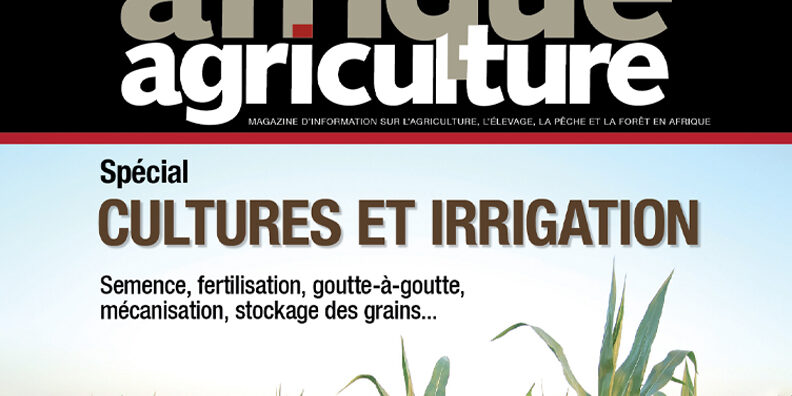
Read the article at the link: www.afrique-agriculure.org
[1] Source: PRACAS, 2014 – Programme for the Revitalisation and Acceleration of Agriculture in Senegal
[2] AMIAG: Moroccan Association for Sprinkler and Drip Irrigation – amiag.ma